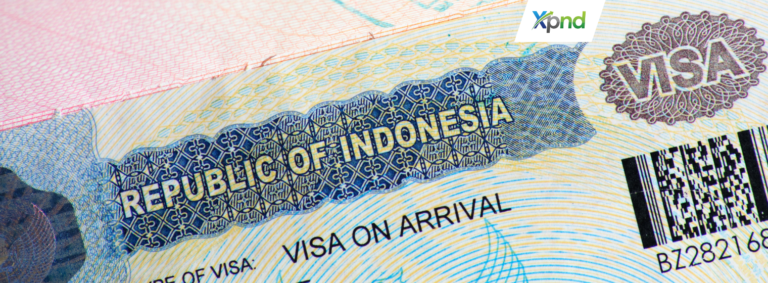



The digital transformation of Indonesia’s immigration services has significantly reshaped the management of short term stay permits. Through the official portal evisa.imigrasi.go.id, processes that were previously administrative and required repeated in person visits can now be initiated online through an integrated system.
In this context, understanding the Visa on Arrival extension procedure is essential for foreign nationals who wish to maintain legal compliance during their stay in Indonesia.
While digitalization has simplified application submission and payment, the latest 2025 regulation reintroduces mandatory physical attendance for biometric data collection.
As a result, the extension process now follows a hybrid model where registration and payment are completed online, while identity verification remains conducted at the immigration office.
Understanding the Visa on Arrival Framework in Indonesia
The Visa on Arrival, commonly referred to as VoA, is designed for short term visits that do not involve employment or permanent residence. The initial validity period is 30 days and it may be extended once for an additional 30 days, resulting in a maximum stay of 60 days.
Permitted activities include:
- Tourism
- Family and social visits
- Business meetings
- Purchasing goods
- Transit to another country
However, VoA holders are strictly prohibited from engaging in income generating activities or employment without the appropriate permit. Violations may result in administrative immigration sanctions, including deportation and blacklisting.
Difference Between Electronic Visa on Arrival and Sticker Visa on Arrival
Within the current digital immigration system, there are two primary categories:
Electronic Visa on Arrival (e-VoA)
The Electronic Visa on Arrival is applied for prior to arrival through the official portal. Applicant data is digitally recorded from the beginning, including QR code verification at the port of entry. This digital profile simplifies the extension process because the system already contains the applicant’s information.
Sticker Visa on Arrival
The Sticker Visa on Arrival is purchased directly at the airport upon arrival. Although the stay rights are identical, holders must first register their physical stay permit into the online system using the feature “Find Existing Stay Permit” before submitting an online extension request.
Understanding this distinction is critical when determining the appropriate technical pathway for a Visa on Arrival extension.
Requirements for Online Visa on Arrival Extension
To proceed with an online Visa on Arrival extension, applicants must prepare the following:
Required Documents
- Passport with a minimum validity of six months
- Scanned passport biodata page including the Machine Readable Zone (MRZ)
- Recent color photograph with a plain white background
- Outbound ticket from Indonesia
Technical Requirements
- Active email address
- International credit or debit card such as Visa, Mastercard, or JCB, or payment through the State Non Tax Revenue System known as Sistem Informasi PNBP Online or SIMPONI
- Uploaded file size within the system limit, generally between 200 KB and 1 MB
Biometric photographs must be taken within the last six months, with a neutral facial expression and without glasses unless medically required. The image processing system will automatically reject documents that fail to meet technical standards, including files that are excessively compressed or overly large.
Even minor data inconsistencies may cause the system to reject the application and require manual verification at the immigration office.
Step by Step Visa on Arrival Extension Procedure
The Visa on Arrival extension process follows structured operational stages.
For e-VoA Holders
- Log in to the account at evisa.imigrasi.go.id
- Select the “Extend My Visa” menu
- Complete the domicile form with accurate Indonesian address details
- Upload supporting documents
- Confirm the data
- Proceed with payment through credit card or SIMPONI
For Sticker VoA Holders
- Access the “Find Existing Stay Permit” menu
- Enter passport number, nationality, and date of birth
- Click “Action” and select “Extend”
- Complete the form and upload documents
- Proceed with payment
Processing Timeline
| Stage | Estimated Duration | System Output |
| Form Completion | 15 to 30 minutes | Application Number |
| Payment Verification | Immediate | Electronic Payment Receipt |
| Document Verification | 1 to 3 working days | Extension Approval |
| Biometric Session | Based on Scheduled Appointment | Activation of New Stay Permit |
Common technical issues include verification emails not received, payment failures due to bank security verification such as 3D Secure, or the “Extend” button not appearing because the visa has not yet entered the extension window, typically 14 days before expiry.
This Visa on Arrival extension process must be initiated within the permitted extension window to ensure that the system activates the extension feature and avoids administrative delays.
2025 Regulation: Mandatory Biometric Requirement and Hybrid Model
Through Circular Letter IMI 417 GR 01 01 Year 2025 issued by the Director General of Immigration, known as Surat Edaran Direktur Jenderal Imigrasi, the government formally ended the pandemic related relaxation that allowed fully online extensions.
Beginning in 2025, all applicants must attend the immigration office for:
- Biometric photograph capture
- Fingerprint recording
- Short interview
The system determines the designated immigration office based on the postal code of the registered domicile provided during the online application. Physical attendance ensures identity accuracy and prevents misuse of stay permits.
Attendance at the scheduled appointment is mandatory. Failure to attend may result in the extension process being unable to proceed.
Extension Fees and Payment Mechanism
The official extension fee is categorized as State Non Tax Revenue (Penerimaan Negara Bukan Pajak or PNBP), and amounts to:
IDR 500,000 for a thirty day extension
Payment methods include:
- SIMPONI billing code system
- International credit or debit card
In certain cases, transactions may be declined due to bank security verification requirements such as 3D Secure. If issues arise, applicants may contact technical support at care@finnet.id.
Overstay Risk and Legal Consequences
Overstay status occurs automatically once the permitted stay expires without an approved extension or departure from Indonesia.
Applicable sanctions include:
- Administrative fine of IDR 1,000,000 per day
- Risk of detention and deportation if overstay exceeds 60 days
Data integration between airlines, hotels, and the national immigration system enables more proactive detection of overstayers. Therefore, applicants are strongly advised to initiate the Visa on Arrival extension process at least 14 days before the expiration date to mitigate administrative risk.
The Role of XPND in Supporting Visa on Arrival Extension and Biometric Compliance
Although the Visa on Arrival extension process can now be initiated online through the official immigration portal, the biometric stage introduced in 2025 requires structured coordination and scheduled physical attendance.
At this stage, punctuality and complete documentation are critical to ensuring a smooth process.
XPND manages this obligation through structured coordination so that biometric appointments are completed efficiently without unnecessary waiting time or repeated visits due to administrative errors. Clients do not need to arrive excessively early, wait for extended periods, or return due to avoidable documentation issues.
Through an organized system, XPND manages:
- Biometric scheduling in alignment with official immigration appointment slots
- Queue and document coordination prior to the visit date
- Confirmation that clients attend at the correct registered time and location
This structured approach ensures that the Visa on Arrival extension process remains compliant with prevailing regulations while minimizing administrative risk and operational inefficiencies. Proper management of both the online submission and physical biometric stages allows the hybrid immigration framework to operate in a controlled and predictable manner.