


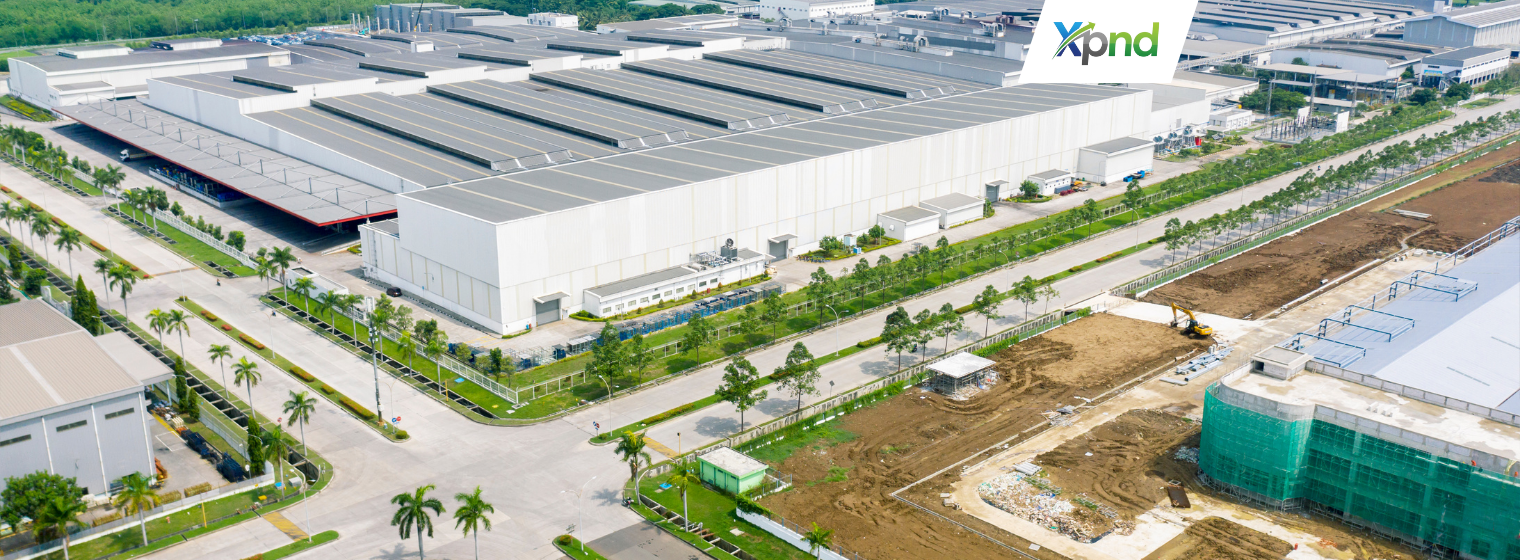
The establishment of a PMA manufacturing facility in Indonesia has become increasingly attractive for foreign companies seeking to expand production capacity in Southeast Asia.
Indonesia offers a compelling combination of a large domestic market, a competitive manufacturing workforce, and continuous regulatory reforms implemented through the Job Creation Law and its implementing regulations.
However, setting up a manufacturing facility in Indonesia is not an instant process. Foreign investors must understand that the establishment of a PMA factory in Indonesia involves a series of interconnected legal and licensing stages. Each stage directly affects the next, meaning that minor missteps at an early phase can result in significant delays, cost overruns, and regulatory exposure later in the investment lifecycle.
This article is designed as a comprehensive guide to help investors understand the full process of establishing a PMA manufacturing facility in Indonesia, from corporate formation through to industrial operational licensing, including estimated timelines and key regulatory risks that require early attention.
Overview of PMA Manufacturing Facilities and the Foreign Investment Framework
A PMA manufacturing facility operates under a Foreign Investment Company known as a Limited Liability Company with Foreign Investment status (Perseroan Terbatas Penanaman Modal Asing/PT PMA).
A PT PMA is an Indonesian legal entity whose shares are partially or fully owned by foreign investors in accordance with Indonesia’s foreign investment regulations.
In practice, a PT PMA is not merely a legal vehicle. It serves as the primary subject of all regulatory compliance obligations, including business licensing, environmental approvals, building permits, employment compliance, and industrial authorization.
For this reason, the establishment of a PMA manufacturing facility in Indonesia must be designed as a structured regulatory project rather than a purely administrative exercise.
Stage 1: Corporate Formation of PT PMA as the Legal Foundation
The first step in establishing a PMA manufacturing facility in Indonesia is the incorporation of a PT PMA in accordance with applicable laws and regulations.
Under the latest regulatory framework introduced by Government Regulation Number 28 of 2025 or PP 28 Tahun 2025 and Investment Coordinating Board Regulation Number 5 of 2025 or Peraturan BKPM No. 5 Tahun 2025, Indonesia has introduced a clear distinction between paid up capital and investment value.
Paid-Up Capital
The minimum paid up capital requirement is IDR 2.5 billion. This amount must be fully injected into the company’s bank account after incorporation. A twelve month lock up period applies, during which the capital may not be returned to shareholders.
However, the capital is not frozen. It may be used for legitimate business activities such as asset purchases, salary payments, and operational expenses.
Investment Value
The investment value must remain above IDR 10 billion per five digit KBLI classification (Klasifikasi Baku Lapangan Usaha Indonesia), excluding land and buildings. This figure represents the total business expenditure commitment until the facility is ready for commercial operation.
The investment value is fulfilled progressively in accordance with the approved business plan and is monitored through Investment Activity Reports or LKPM (Laporan Kegiatan Penanaman Modal).
The reduction of paid up capital to IDR 2.5 billion does not reduce the overall investment obligation. Investors must still prepare a credible and defensible business plan to demonstrate how the required investment value will be achieved.
The PT PMA incorporation process typically includes the preparation of the deed of establishment, approval from the Ministry of Law and Human Rights or Kementerian Hukum dan HAM, and bank account opening. This process generally takes between fourteen and eighteen working days.
Stage 2: OSS RBA Registration and Issuance of NIB
Once the PT PMA is established, the company must register through the Online Single Submission Risk Based Approach system or OSS RBA (Online Single Submission Risk Based Approach).
The primary output of OSS registration is the Business Identification Number or NIB (Nomor Induk Berusaha), which functions as:
- The official business identity
- Import identification number
- Customs reference
- Linkage to tax and social security systems
It is critical to understand that the NIB is not an operational license for manufacturing activities. Instead, it serves as an entry point for fulfilling Business Licensing requirements based on the risk level of the business activity.
A common mistake at this stage is assuming that the NIB constitutes final operational approval. This misunderstanding often causes investors to delay preparation of subsequent licenses that ultimately determine the legal operability of the factory.
Stage 3: Spatial Compliance and Environmental Approval
A manufacturing facility may only be constructed if its location and environmental impact are approved by the relevant authorities. This stage frequently becomes a critical path in the establishment of a PMA factory in Indonesia.
Spatial Conformity Approval (KKPR)
The 2025 OSS system is integrated with digital Detailed Spatial Plan maps or RDTR (Rencana Detail Tata Ruang). Factory locations are automatically validated against zoning regulations. If a site does not comply with zoning designation, the system may block further processing.
Environmental Approval
For manufacturing activities, environmental compliance is divided into two pathways. UKL-UPL (Upaya Pengelolaan Lingkungan dan Upaya Pemantauan Lingkungan) applies to most general manufacturing activities, while AMDAL (Analisis Mengenai Dampak Lingkungan) applies to large scale or high risk operations.
UKL-UPL typically requires forty five to ninety days, whereas AMDAL may take between one hundred eighty and two hundred forty days. Errors in determining the appropriate environmental pathway can directly affect construction schedules and industrial licensing timelines.
Stage 4: Building Approval Certificate PBG
Before construction begins, the company must obtain a Building Approval Certificate or PBG (Persetujuan Bangunan Gedung) through the SIMBG system. The PBG replaced the former building permit regime and emphasizes technical verification.
Authorities review:
- Architectural and structural drawings
- Earthquake resistance calculations
- Mechanical electrical and plumbing systems
- Environmental integration
The quality and completeness of technical documentation play a decisive role in accelerating approvals and avoiding repeated revisions.
Stage 5: Industrial Business License IUI
The Industrial Business License or IUI (Izin Usaha Industri) is the principal operational license that allows a PMA manufacturing facility to legally conduct production activities.
IUI applications are integrated between OSS and the Ministry of Industry’s SIINas system. Government authorities evaluate:
- Production capacity and machinery specifications
- Raw material sourcing and supply chain structure
- Quality control systems
- Workforce planning
- Alignment with approved environmental and building permits
The IUI processing period generally ranges from forty five to sixty working days.
Ideal Timeline for Establishing a PMA Manufacturing Facility in Indonesia
In general, the establishment of a PMA manufacturing facility in Indonesia requires approximately twelve to fifteen months, following this sequence.
- Month one: Involves PT PMA incorporation and capital injection
- Month two: Covers OSS registration and NIB issuance
- Months three to six: Focus on environmental approval and building approval
- Months seven to ten: Involve construction and preparation for industrial licensing
- Months eleven to twelve: Cover IUI issuance and operational readiness
With proper planning and parallel processing, this timeline can be optimized without violating regulatory requirements.
Post Establishment Obligations LKPM and Ongoing Compliance
Under Investment Coordinating Board Regulation Number 5 of 2025, Investment Activity Reporting or LKPM has become the primary supervisory instrument. Reporting is conducted on a quarterly basis and is integrated with automated administrative sanctions.
Failure to submit LKPM may result in:
- Written warnings
- Temporary suspension of business activities
- Freezing of the NIB
- Blocking of immigration services for foreign directors and commissioners
This means that the establishment of a PMA manufacturing facility in Indonesia does not end when licenses are issued. Ongoing compliance is a determining factor for long term operational sustainability.
The Role of XPND in Supporting PMA Manufacturing Establishment and Compliance
In practice, the establishment of a PMA manufacturing facility in Indonesia does not depend solely on obtaining initial licenses. More critical challenges often arise from data readiness, consistency between investment plans and OSS implementation, and the company’s ability to maintain compliance after licenses are granted.
Many investors encounter obstacles due to interconnected regulatory requirements, discrepancies between business plans and on site execution, and increased automated supervision across OSS, taxation, and employment systems. Minor inconsistencies at early stages can evolve into operational barriers later.
As a strategic partner, XPND supports foreign companies in managing the establishment of PMA manufacturing facilities in a structured and measured manner. The approach is preventive rather than reactive, focusing on identifying and managing regulatory risk before it affects licenses, operations, or investment realization.
XPND’s support typically includes:
- Assessing readiness from the perspective of PT PMA structure, KBLI selection, and investment planning.
- Reviewing alignment between paid up capital, investment value, and OSS reporting obligations.
- Supporting business licensing processes including OSS RBA, environmental approvals, and industrial licenses.
- Ensuring data consistency across OSS, technical permits, and LKPM reporting
- Assisting companies in preparing post license compliance to maintain stable operations.
Through an approach grounded in regulatory understanding and practical experience, XPND helps investors integrate compliance into sustainable business governance.
Early and well structured support enables companies to minimize supervision risk, protect project continuity, and build a strong operational foundation in Indonesia.