


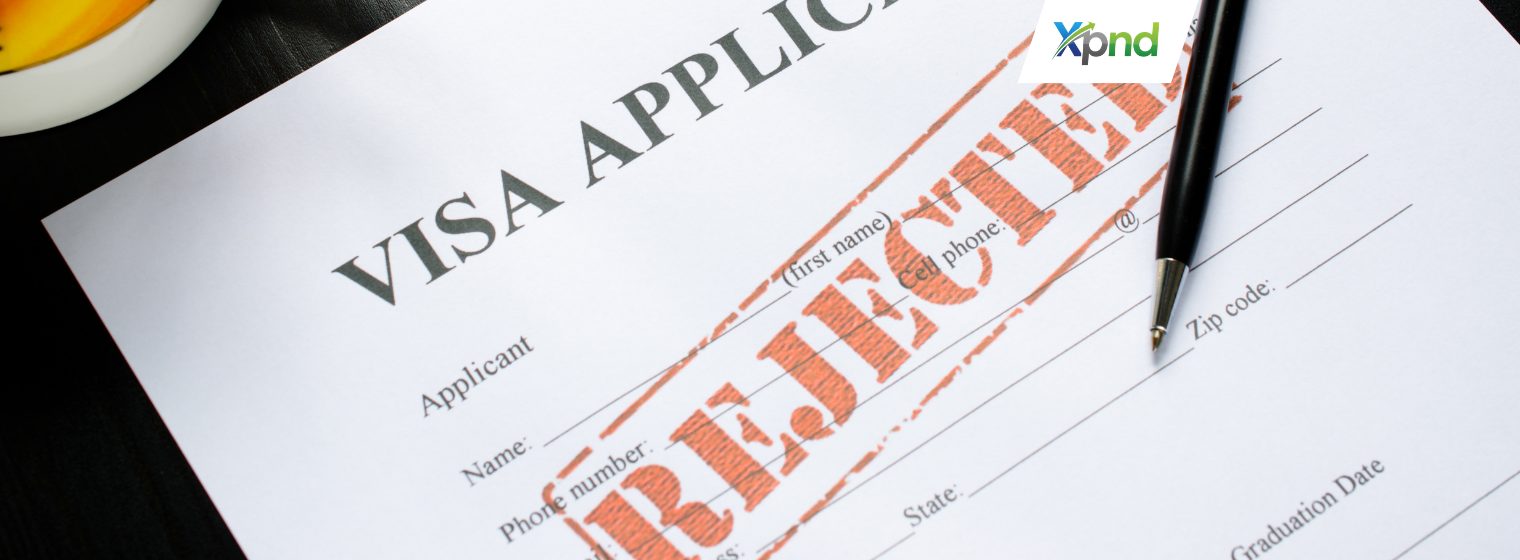





The application went in, the fee was paid, and then the rejection notification arrived. No refund. No detailed explanation. Just a generic error code and the realization that the process has to start over.
For individual expats, this usually means weeks of delay before a spouse or child can legally join them in Indonesia. For HR managers and corporate mobility teams handling multiple expatriate families at once, a dependent Temporary Stay Permit (Kartu Izin Tinggal Terbatas or KITAS) rejection does not just affect one household. It disrupts relocation timelines, strains employee trust, and in some cases creates immigration gaps that affect the primary KITAS holder’s own permit status.
Rejections are more common than most applicants expect, and the reasons behind them are rarely arbitrary. The Directorate General of Immigration (Direktorat Jenderal Imigrasi) system runs automated document verification, which means a single technical error in a submission can trigger an instant rejection before a human officer ever reviews the case. The Non-Tax State Revenue (Penerimaan Negara Bukan Pajak or PNBP) fee does not get refunded when this happens.
Understanding exactly why dependent KITAS applications fail is the fastest way to avoid repeating the same mistake. This article covers the most common rejection reasons, what the system specifically checks for, and what both individual applicants and corporate mobility teams can do to prevent them.
What Is a Dependent KITAS and Who Qualifies
Before getting into rejection reasons, it helps to be clear on the scope. A dependent KITAS is a limited stay permit issued to the family members of a primary KITAS holder. Under Indonesian immigration law, specifically Law No. 63 of 2024 on Immigration (Undang-Undang Nomor 63 Tahun 2024 tentang Keimigrasian) and Government Regulation No. 40 of 2023 (Peraturan Pemerintah Nomor 40 Tahun 2023), the following categories are eligible to apply as dependents:
The legally married spouse of a foreign national who holds a valid Work KITAS or Investor KITAS. Children under 18 years of age, or up to 21 years if unmarried and financially dependent, of a primary KITAS holder. As of a December 2025 update, family members including spouses, children, parents, and siblings of Remote Worker (E33G) KITAS holders are also now eligible.
The dependent permit mirrors the validity of the primary KITAS holder’s permit and does not grant the right to work or conduct business in Indonesia. That last point matters: dependent KITAS holders who work without obtaining a separate work permit are in violation of immigration regulations.
Explore Our Services Dependent Visa in Indonesia
The Most Common Reasons a Dependent KITAS Gets Rejected
The sponsor’s primary KITAS is expired, under review, or not yet active
The entire dependent application stands on the sponsor’s permit status. If the primary KITAS holder’s permit has expired, is currently being renewed, or has not yet been issued at the time the dependent application is submitted, the system will reject the dependent application automatically. The dependent permit cannot exist without a valid, active underlying permit to attach to.
This is the most administratively straightforward rejection reason and also one of the most frustrating, because the solution is simply timing. Submit the dependent application only after the primary KITAS has been confirmed as active, and check that the remaining validity of the primary permit is sufficient to support a meaningful dependent permit duration.
Incomplete or incorrect documents
The e-Visa portal employs automated verification. Documents that fail to meet the technical specifications defined by the system trigger a rejection before any officer reviews the substance of the application.
The passport is the first filter. The applicant’s passport must have a minimum remaining validity of 18 to 30 months for a one or two-year KITAS application. Any scan that cuts off a biographical data page, even slightly, will fail. Blurry images taken with a smartphone camera are among the most common causes of automatic rejection at this stage.
Beyond the passport, photographs submitted must have the correct background color as specified in the portal instructions, taken within the last six months, at sufficient resolution. The portal is specific about these technical requirements, and the automated system enforces them without discretion.
Marriage certificate not properly legalized or apostilled
For a spouse dependent application, the marriage certificate is the substantive foundation of the entire case. How it needs to be submitted depends on where the marriage took place.
For marriages conducted in Indonesia, the required document is either the original Marriage Book (Buku Nikah) from the Office of Religious Affairs (Kantor Urusan Agama or KUA) for Muslim marriages, or a Civil Marriage Certificate (Akta Perkawinan) from the Population and Civil Registry Office (Dinas Kependudukan dan Pencatatan Sipil or Dukcapil) for civil marriages.
For marriages conducted outside Indonesia, the foreign marriage certificate must carry an Apostille certification issued by the competent authority in the country where the document was issued. Since Indonesia acceded to the Hague Apostille Convention 1961, Apostille is the accepted legalization method for documents from participating countries. For documents from countries that are not party to the Convention, the document must be legalized through the Indonesian Embassy or Consulate in the country of origin instead.
A marriage certificate that arrives without an Apostille, with an Apostille from the wrong authority, or with an Apostille that has expired or been obtained improperly will trigger rejection. The same applies to translations: any foreign-language document must be translated into Indonesian by a sworn translator (penerjemah tersumpah) registered with the Indonesian government. A translation done by a bilingual friend, a standard translation service, or an unregistered translator is not accepted.
Errors in either the Apostille certification or the translation are among the most frequent causes of rejection specifically because they look complete on the surface but fail the verification check.
Mismatched information between documents
The immigration system cross-references information across all submitted documents. If the name on the passport is spelled differently from the name on the marriage certificate, if the date of birth in the application form does not exactly match the passport, or if the address provided does not align with any of the supporting documents, the system will flag the inconsistency.
This sounds easy to avoid, but it catches a significant number of applications. Transliterations of names from non-Latin scripts can produce different spellings across different documents. A middle name that appears on one document but not another creates a discrepancy. Applicants should audit every submitted document against every other submitted document before submitting, treating any variation as a potential rejection trigger.
Sponsor ineligibility
Not every KITAS type qualifies to sponsor a dependent. The sponsor must hold one of the following permit types: a Work KITAS (previously categorized as C312, now under the updated E-series framework as E23), an Investor KITAS, or an E33G Remote Worker KITAS as of the December 2025 update. Student KITAS holders, retirement KITAS holders, and holders of certain short-term permits are generally not eligible to sponsor dependent applications under the standard process.
Applications that list an ineligible sponsor category will be rejected regardless of how complete the rest of the documentation is. If you are unsure whether your permit type qualifies for dependent sponsorship, verify this before paying the application fee.
Passport validity does not meet the minimum threshold
This is distinct from the document scan quality issue. Even if the passport scan is technically perfect, if the actual passport validity is less than the minimum required at the time of submission, the application will not proceed. The standard minimum is 18 months of remaining validity for a one-year KITAS application. Some immigration offices apply a 30-month standard for two-year permits.
This catches applicants who have recently renewed their permit but not their passport, or those who submitted the application close to a passport expiry date without checking the calculation. If the passport does not meet the threshold, renewing the passport before applying is the only path forward.
The dependent has a history of overstay or immigration violations
Immigration authorities review the immigration history of the dependent applicant during the review process. A prior overstay, even a short one, raises a compliance concern and can result in rejection or extended scrutiny. Indonesia’s immigration system has tightened this review significantly: between January and April 2025, immigration violations increased by 36.7% compared to the same period in 2024, which directly contributed to stricter verification requirements introduced in May 2025, including mandatory in-person biometric appointments for all permit applications and renewals.
Applicants with a prior overstay should expect their application to require additional documentation or to be reviewed more carefully. In some cases, they may be asked to apply from outside Indonesia rather than through an in-country conversion.
The application type does not match the actual situation
The dependent KITAS framework distinguishes between several situations that require different application categories. A foreign spouse of an Indonesian citizen applies under a different category (previously C317, now under the updated E-series as E31A) than the foreign spouse accompanying an expatriate worker (E31B). A child of a primary KITAS holder applies under yet another category.
Selecting the wrong category, even if all the documents are correct, results in a rejection because the system validates the submitted documents against the expected requirements for the selected permit type. The document requirements differ meaningfully between categories, so a mismatch between the selected category and the submitted documents creates an immediate problem.
Explore Our Services KITAS in Indonesia
What to Do After a Rejection
A rejection does not bar you from reapplying. Indonesia does not limit the number of times an applicant can submit a dependent KITAS application. The practical steps after a rejection are to identify precisely which document or requirement caused the failure, correct that specific issue, and resubmit with a complete and technically correct package.
The challenge is that rejection notifications from the automated system are not always detailed. If the rejection notification does not specify the cause clearly, reviewing the submission against each of the requirements listed above will usually identify the gap.
If the sponsor’s primary KITAS is still valid and you have time before any travel or residency deadline, reapplying with a corrected and complete document set is straightforward. If you are working against a deadline or dealing with compounding issues such as a near-expiry passport combined with a document legalization problem, getting professional assistance at that point is often more efficient than iterating through multiple rejection cycles independently.
How to Avoid Rejection in the First Place
Most dependent KITAS rejections are preventable. The system is strict but consistent: it checks the same things every time. Running through the following checklist before submission eliminates the majority of rejection risk.
- Confirm the primary KITAS is active and has sufficient remaining validity before submitting.
- Verify the applicant’s passport has at least 18 months of validity from the intended application date.
- Check that all documents issued outside Indonesia carry valid Apostille certification, or have been legalized through the Indonesian Embassy or Consulate in the country of origin.
- Ensure all foreign-language documents have been translated by a registered Indonesian sworn translator.
- Cross-check every name, date, and identification number across all submitted documents for exact consistency. Any variation, however minor, is a potential rejection trigger.
- Confirm the sponsor’s permit type is eligible for dependent sponsorship before paying the application fee.
- Select the correct application category for your specific situation before beginning the submission.
For couples navigating the application together, the complete document requirements for spouse dependent KITAS provide a detailed breakdown of what is needed at each stage. If children’s permits are involved alongside a spouse application, understandingwhat happens to a child’s KITAS status at age 18 is also worth reviewing before the family’s permits are structured.
For the primary KITAS holder, keeping the underlying permit in good standing is the prerequisite for everything else. If the main permit is due for renewal, starting that process well before expiry, ideally at least 60 days ahead, protects the dependent permit as well. A guide to renewing a KITAS in Indonesia covers the current renewal process including the in-person biometric requirement introduced in May 2025.
A Note on the May 2025 Biometric Requirement
Since May 2025, all KITAS applications and renewals require a mandatory in-person appointment at the local immigration office for a photo and interview. The previous fully online process has been replaced with a hybrid model: applications are submitted through the evisa.imigrasi.go.id portal, but applicants must attend an in-person biometric session before the physical permit is issued.
This change affects dependent KITAS applicants directly. Plan for the in-person appointment as part of the overall timeline, and ensure that the applicant is physically present in Indonesia, or can enter Indonesia on a valid Limited Stay Visa (Visa Izin Tinggal Terbatas or VITAS) to complete the biometric session. Applications submitted from outside Indonesia on an e-visa will still require the biometric appointment upon arrival.
Working with a Professional
The dependent KITAS process is administratively precise. The automated e-Visa system does not allow for partial submission or document substitution after an application is in review. Each error resets the process and costs the application fee again.
XPND handles dependent visa processing as part of its immigration services, including document preparation, Apostille coordination, and sponsor structuring for foreign investors and corporate clients. If you are unsure which documents apply to your specific situation, or if a previous application was rejected and you want to understand what went wrong before reapplying, our team is available for a free initial consultation.