






A manufacturing company evaluating Southeast Asian locations for a new electronics assembly facility recently narrowed its shortlist to three options: Johor Bahru in Malaysia, Ho Chi Minh City in Vietnam, and Batam in Indonesia. The finance team’s initial preference was Johor because of its land bridge connection to Singapore. The operations team’s preference shifted to Batam after one number became clear: Batam is 20 kilometers from Singapore’s port and financial center, closer than Johor by road travel time, and its operational costs run at approximately 40 to 60 percent below Singapore levels while maintaining direct maritime access to the same shipping routes.
Geography does not fully explain Batam’s investment case, but it is the starting point. Every other advantage the island offers, from its FTZ incentives to its industrial infrastructure, is built on top of a geographic position that took decades for Indonesia to deliberately develop into an investment platform.
Where Batam Is and Why the Position Matters
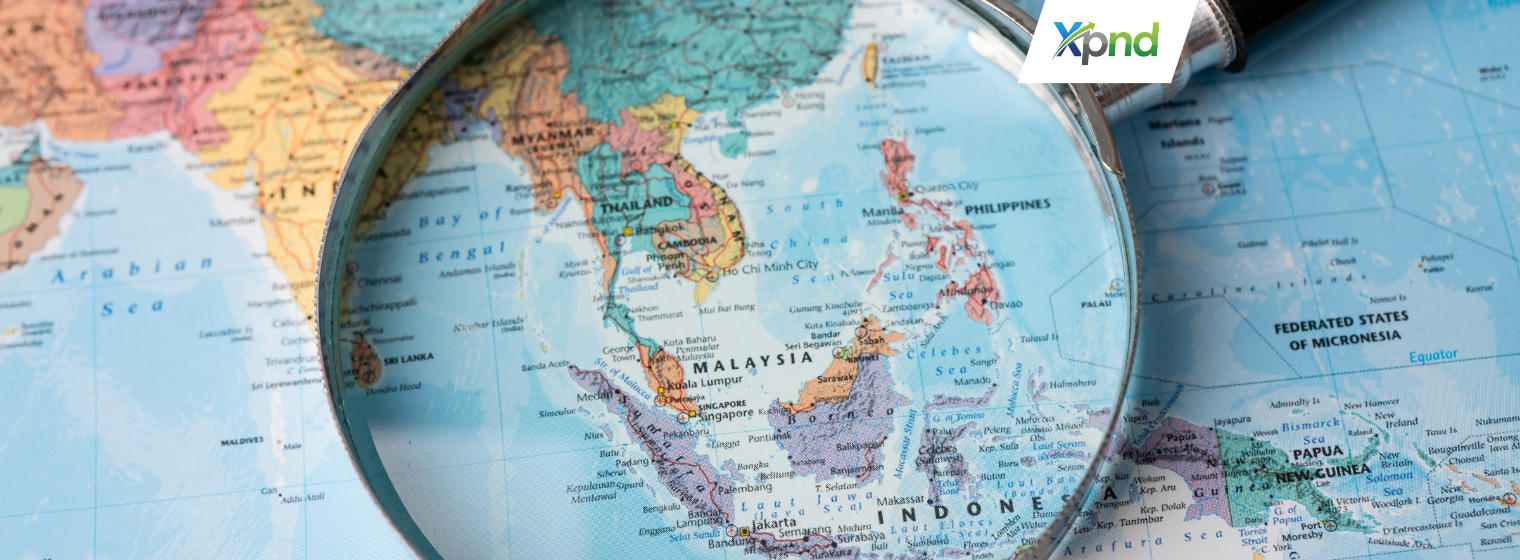
Batam Island sits in the Riau Islands Province of Indonesia, positioned at the southern end of the Singapore Strait and the northeastern entrance to the Malacca Strait. The city covers a land area of 1,020 square kilometers with a total administrative area of 1,915 square kilometers including surrounding waters. The island is part of a larger administrative cluster that includes Rempang and Galang islands, connected to Batam by the Barelang Bridge.
Batam is located 20 kilometers south of Singapore, separated by the Strait of Singapore. This distance is not just a data point. It is the foundation of Batam’s entire investment proposition. A 40 to 90 minute ferry ride separates Batam from one of the world’s most expensive operating environments, while keeping companies within the same logistical reach of Singapore’s port, financial system, and regional hub functions.
The Malacca Strait, through which approximately 40 percent of global seaborne trade passes annually, runs along Batam’s western and southern coast. Situated strategically southeast of the Malacca Strait, the world’s busiest shipping lane, Batam plays a pivotal role in marine and shipyard industries. For manufacturers exporting to Europe, the Middle East, South Asia, and East Asia, proximity to this shipping lane translates directly into freight cost and transit time advantages.
The SIJORI Growth Triangle: A Framework Built Around Batam’s Geography
Batam’s geographic position is not incidental to regional economic planning. It was the basis for a deliberate cross-border economic cooperation framework that has shaped investment flows across the region for more than three decades.
The SIJORI Growth Triangle concept was initially proposed by then First Deputy Prime Minister Goh Chok Tong of Singapore in December 1989, who envisioned a Triangle of Growth encompassing the city-state, Johor to the north, and Batam Island in Riau Province to the south. The agreement merged Singapore’s managerial skills, capital, technology, and infrastructure with the ample labor, land, and natural resources of Johor state and Riau province.
The SIJORI framework formalized what geography had already created: a functional economic zone where Singapore’s capital and connectivity, Malaysia’s industrial capacity, and Indonesia’s land and labor resources could be deployed together across a single production cluster. Batam was positioned as the Indonesian anchor of this triangle because of its proximity to Singapore and its accessibility from international shipping routes.
Current growth across the SIJORI markets points to a coordinated shift towards an interdependent digital corridor. Singapore maintains its position as the region’s high-value nerve centre, while the most significant growth stories are now unfolding in its neighbouring markets. Batam’s role within this framework has expanded from a labor-cost arbitrage platform into a location for high-value manufacturing, data centers, and technology operations that require Singapore adjacency without Singapore-level costs.
The Four Geographic Advantages That Drive Investment Decisions
Singapore Proximity at Indonesia Cost Levels
Batam’s biggest competitive edge lies in its geographic proximity to Singapore, one of the world’s leading financial and digital hubs. The island is only a 40 to 90 minute ferry ride away, enabling seamless integration between the two markets.
For manufacturers and technology companies, this proximity creates a specific operational model: corporate headquarters, sales functions, and high-value professional services remain in Singapore, while manufacturing, assembly, processing, and infrastructure-heavy operations are based in Batam. The two locations function as a single operational unit while each captures the cost and regulatory advantages of its respective jurisdiction.
Singapore-based executives can attend meetings in Batam and return the same day. Singapore’s logistics infrastructure, banking system, and professional services ecosystem are accessible within the same business day. Yet Batam’s labor costs, industrial land rates, and operating overheads are a fraction of Singapore’s, as confirmed by the factory rental rates discussed in the Batam industrial parks guide.
Position on the World’s Busiest Shipping Lane
The Malacca Strait handles roughly 40 percent of global maritime trade and more than 25 percent of the world’s oil supply. Batam’s coastal position on this lane gives manufacturers direct access to container shipping without the transshipment premium that inland or less-connected port locations incur.
Batu Ampar Port is Batam’s main logistics gateway. With a modern STS Crane capable of loading and unloading 35 containers per hour, the port is increasingly efficient. The Container Yard area is being developed to 20 hectares, targeted for completion in 2025 to increase storage capacity and become a direct hub without transit to various countries.
The development of a direct-call capability at Batu Ampar, bypassing Singapore transshipment for certain routes, reduces freight costs and transit times for manufacturers exporting from Batam to markets in Europe, the Middle East, and the Americas.
The Longest Runway in Indonesia
Air freight and executive mobility are often overlooked in industrial location analysis but matter significantly for manufacturers with global supply chains.
Hang Nadim Airport has a 4,028 meter runway, the longest in Indonesia and third in Southeast Asia. In 2024, Hang Nadim International Airport handled 4,173,425 passengers and 35,843 tonnes of cargo. The runway length enables wide-body cargo aircraft to operate directly from Batam, supporting time-sensitive components import and finished goods export without routing through Singapore’s Changi Airport.
Low Natural Disaster Risk
The island is geographically stable, with low risk of earthquakes and no tsunami exposure, enhancing operational resilience. This is a material advantage for manufacturers and data center operators who require continuous operations. Batam sits outside the Pacific Ring of Fire’s most active seismic zones and has not experienced significant earthquake or tsunami events.
For data center and hyperscale infrastructure operators, Batam’s geological stability combined with its Singapore proximity creates a specific value proposition: Batam sits inside the SIJORI growth triangle, only twenty kilometers south of Singapore’s submarine cable hubs. Consequently, latency remains below three milliseconds, an essential benchmark for AI and trading workloads.
Explore Our Services Establish Your PT PMA in Indonesia
The Batam-Bintan-Karimun (BBK) Cluster
Batam’s geographic advantage is amplified by its position within a broader cluster of islands that extend the investment footprint of the SIJORI framework.
The Batam-Bintan-Karimun (BBK) cluster groups three Indonesian island territories under a coordinated FTZ framework. Bintan, located east of Batam, hosts its own industrial zones and a significant tourism and resort sector. Karimun, to the west, focuses on maritime and shipbuilding industries. Together the three islands offer investors complementary industry environments within a single FTZ administrative framework.
Fary Djemy Francis, Deputy for Investment and Business at BP Batam, highlighted Batam-Bintan-Karimun’s growing strategic role amid shifts in global supply chains, supported by Batam’s location just 20 kilometers from Singapore, an advantage few Southeast Asian regions can match.
In November 2025, Batam secured USD 10.35 billion in investment commitments from 20 global companies during the Islands of Growth forum in Singapore, spanning energy, advanced manufacturing, maritime, and logistics sectors. The scale of these commitments reflects the confidence of multinational companies in Batam’s geographic and infrastructure position as a long-term manufacturing and technology base.
Batam’s Location Compared to Competing Southeast Asian Destinations
For investors comparing Southeast Asian manufacturing locations, Batam’s geographic position creates a specific competitive profile.
Versus Johor Bahru, Malaysia
Johor has gained significant attention through the Johor-Singapore Special Economic Zone. However, Batam is 20 kilometers from Singapore by sea, while Johor requires land crossing through the Causeway or Second Link. For industries that depend on maritime logistics rather than road freight, Batam’s direct sea access is structurally superior. For companies whose executives split time between Singapore and the production base, the ferry journey to Batam is faster than driving to many parts of Johor during peak hours.
Versus Vietnam (Ho Chi Minh City and Hanoi corridors)
Vietnam’s industrial parks have attracted significant manufacturing investment based on labor cost and production scale. However, Vietnam lacks the direct Singapore adjacency that Batam provides. Companies serving Singapore-centric financial, technology, and professional services clients need physical proximity that Vietnam cannot offer. Batam’s competitive position against Vietnam is strongest for industries where Singapore connectivity is operationally necessary rather than merely convenient.
Versus other Indonesian locations
Within Indonesia, Batam’s proximity to Singapore is unique. The Greater Jakarta industrial corridor (Bekasi, Karawang, Cikarang) offers scale and domestic market access, but is 900 kilometers from Singapore. Batam is the only Indonesian location that offers simultaneous access to Singapore’s infrastructure network and Indonesia’s investment incentives.
Infrastructure That Translates Geography into Business Utility
Geographic position alone does not determine investment viability. What has made Batam’s location actionable for manufacturers and investors is the infrastructure built to leverage it.
Five port terminals serve different cargo and passenger functions: Batu Ampar for general and container cargo, Kabil for heavy industrial cargo, Tanjung Uncang for the maritime and shipbuilding cluster, and multiple international passenger terminals including Batam Centre, Harbor Bay, and Nongsa for cross-border ferry services to Singapore.
The FTZ framework, originally established under Law No. 36 of 2000 and most recently expanded under PP No. 47 of 2025, provides duty exemptions, tax facilities, and import simplifications that make Batam operationally and financially competitive relative to other manufacturing locations in the region. The most recent expansion of the FTZ boundary is covered in the XPND analysis of the FTZ Batam area expansion under PP 47/2025.
What Geography Does Not Resolve
Batam’s location creates opportunity, but geography does not automatically translate into an easy investment experience. The FTZ administrative framework involves BP Batam as a separate authority layer from the national OSS RBA system used elsewhere in Indonesia. Company establishment, licensing, and immigration processes in Batam have their own procedural characteristics that differ from Java-based operations.
For manufacturers and investors who are clear on what Batam’s geographic position offers for their specific operation type, the next question is how to establish and structure the investment correctly. The guide on setting up a business in Batam for foreign investors covers the incorporation and licensing process.
XPND and Batam Investment Setup
Batam’s geographic advantages are well documented. Translating them into a functioning investment requires understanding how the FTZ framework, OSS RBA system, BP Batam procedures, and immigration requirements interact for the specific type of operation being established.
XPND (xpnd.co.id) works with manufacturers and investors on Batam investment setup from the initial structure assessment through licensing, company establishment, and ongoing compliance. For companies at the feasibility stage comparing Batam against other locations, we help frame the comparison around the factors that matter for the specific business model.
Companies evaluating Batam as an investment location can reach out to the XPND team at info@xpnd.co.id.