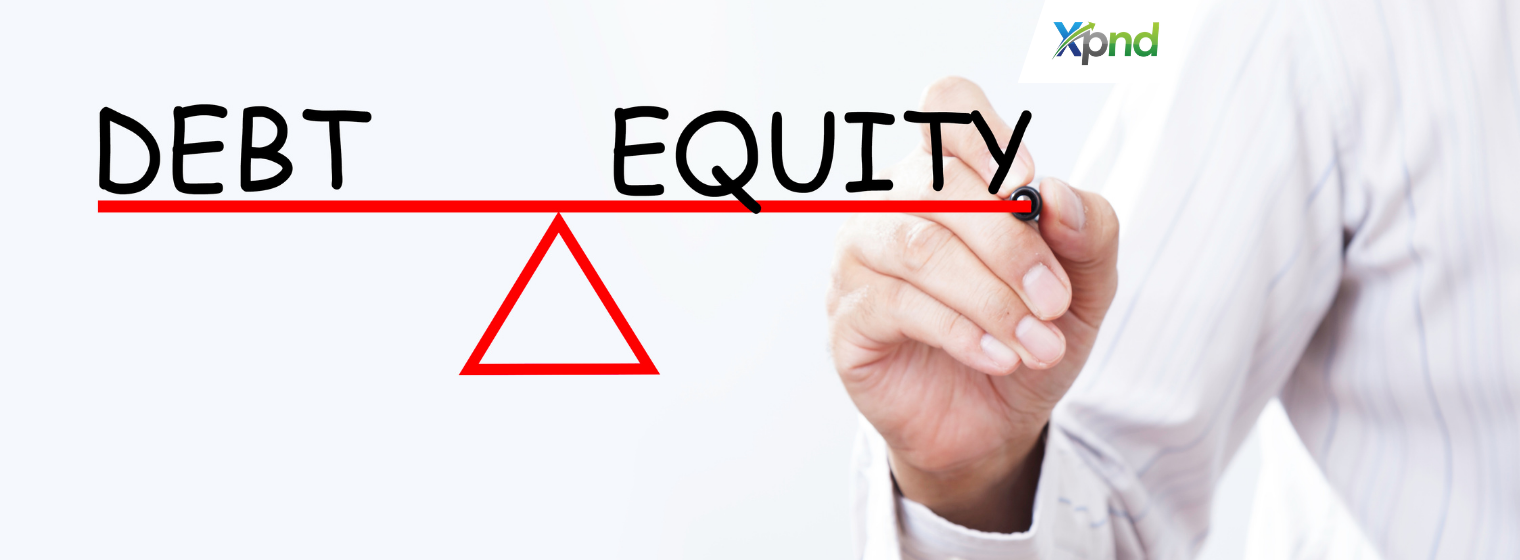




A foreign parent company lends money to its Indonesian subsidiary. The subsidiary books the interest as a deductible expense, reducing its taxable income in Indonesia. This structure is entirely legitimate, subject to one constraint: the ratio between the subsidiary’s total debt and its equity cannot exceed 4:1 for the interest deduction to apply in full. If it does, the portion of interest attributable to debt above that ratio becomes non-deductible. The subsidiary still pays the interest to its parent. It just cannot offset its Indonesian tax base with it.
This is Indonesia’s thin capitalization rule, established under Ministry of Finance Regulation No. 169/PMK.010/2015 (PMK 169/2015) and operative since Fiscal Year 2016. Nearly a decade after its introduction, the regulation remains unchanged. No amendment has been issued. No revision has been enacted under PMK 81/2024 or any subsequent Coretax-related regulation. For PT PMA entities funded with a combination of shareholder equity and intercompany loans, the 4:1 DER ceiling is a live compliance obligation that sits directly in the path of how many foreign-owned Indonesian companies structure their capital.
Why Thin Capitalization Rules Exist and Why Indonesia Uses a Ratio Approach
The policy rationale behind thin capitalization rules is straightforward. Interest paid on debt reduces taxable income. If a company can replace equity with debt at will, and particularly if that debt comes from a related party in a lower-tax jurisdiction, it can shift taxable profits out of the higher-tax country by paying interest rather than declaring dividends. Dividends are paid from after-tax profit. Interest is paid from pre-tax profit. The tax saving from substituting equity with related-party debt can be substantial, and multinationals have historically used this mechanism extensively.
Countries address this in different ways. The OECD’s BEPS Action Plan 4 recommends an earnings-based approach, capping deductible interest at a percentage of EBITDA (typically 10 to 30 percent). Indonesia uses the simpler and older approach: a fixed debt-to-equity ratio. The 4:1 ceiling is generous by international comparison. Most countries implementing DER-based rules use 3:1, 2:1, or tighter thresholds. Only a small number of jurisdictions maintain ratios as high as Indonesia’s. The trade-off is that Indonesia’s rule is simple to apply and administer, but it captures less aggressive thin capitalization behavior than an EBITDA-based rule would. Academic researchers and tax practitioners have noted that companies can remain within the 4:1 ratio while still achieving substantial interest deduction benefits through legitimate financing structures.
For Indonesian tax purposes, the interaction between the DER rule and the transfer pricing framework under Article 18(3) of the Income Tax Law creates an additional layer: even where the DER is within the 4:1 ceiling, DJP retains the authority to challenge interest rates or loan terms that do not reflect arm’s length conditions. The DER rule and the arm’s length principle operate in parallel, not as alternatives.
How the DER Calculation Actually Works
The calculation under PMK 169/2015 is more nuanced than the 4:1 headline ratio suggests. Three technical details determine whether a company’s financing structure is compliant, and each one is regularly misapplied.
Debt and Equity Are Defined Precisely, and the Definitions Matter
Debt for DER purposes is the average of month-end outstanding debt balances across the fiscal year (or the relevant part of the year). It includes short-term debt, long-term debt, and interest-bearing trade payables. Crucially, it includes intercompany loans from related parties that carry an interest charge. What it does not include is non-interest bearing loans from related parties, whether shareholders, affiliates, or other connected persons.
Equity for DER purposes is the average of month-end equity balances across the fiscal year, calculated in accordance with Indonesian Financial Accounting Standards (SAK). Non-interest bearing related party loans are added to equity in the denominator of the DER calculation, not counted as debt. This treatment reflects the policy judgment that a related party loan on which no interest is charged economically resembles an equity injection rather than a commercial debt instrument.
The practical consequence of this design is significant for companies that use shareholder loans as a flexible funding tool. A non-interest bearing shareholder loan increases the equity base in the DER denominator, which helps keep the ratio within the 4:1 ceiling. An interest-bearing shareholder loan of the same amount sits in the debt numerator, pushing the ratio upward. Two companies with identical balance sheets can have very different DER positions depending solely on whether related-party debt carries an interest charge.
The Calculation Uses Monthly Averages, Not Year-End Balances
PMK 169/2015 requires the DER to be calculated using the average of month-end balances, not the balance sheet position at December 31. This is a deliberate design choice to prevent window-dressing: a company that temporarily reduces its debt just before year-end to lower the DER snapshot cannot use that maneuver to reduce the calculated ratio. The averaging requirement means that debt incurred and repaid within the year still factors into the DER calculation proportionally.
For a PT PMA that has drawn down an intercompany loan mid-year, the month-end balances from the date of drawdown through to December 31 are all included in the average. The DER is calculated across the full fiscal year, and the non-deductible interest is determined by the proportion of interest attributable to debt in excess of 4x the equity base.
Computing Non-Deductible Interest
When the calculated DER exceeds 4:1, the amount of interest that becomes non-deductible is determined by the following logic: only the portion of interest expense attributable to debt beyond the 4:1 ceiling is disallowed. A company with total average debt of IDR 500 billion and average equity of IDR 100 billion has a DER of 5:1. The permissible debt ceiling at 4:1 is IDR 400 billion. The excess debt is IDR 100 billion, representing 20 percent of total debt. Therefore, 20 percent of total interest expense is non-deductible.
PER-25/PJ/2017, the implementing regulation, provides worked numerical examples that illustrate this calculation and addresses the specific reporting procedures, including how to disclose the DER calculation in the annual corporate income tax return and how to report private external debt to DJP. For PT PMA entities that have both domestic bank debt and related-party intercompany loans, the DER calculation combines all qualifying debt categories into a single numerator.
Explore Our Services Tax Compliance in Indonesia
Exempted Entities and Sectors
Not all Indonesian taxpayers are subject to PMK 169/2015. The regulation explicitly exempts several categories where the policy rationale for a fixed DER ceiling is outweighed by sector-specific financing characteristics:
- Banks and financial institutions licensed by the Financial Services Authority (OJK), whose leverage is governed by separate prudential capital frameworks
- Insurance and reinsurance companies, similarly governed by OJK capital adequacy standards
- Companies engaged in oil and gas mining under a Production Sharing Contract (Kontrak Bagi Hasil or KBH)
- Companies engaged in general mining under an applicable coal or mineral mining agreement
- Companies in the infrastructure sector, as defined by applicable regulations
For PT PMA entities in manufacturing, trading, services, technology, and most other sectors, the exemption does not apply. The 4:1 DER rule operates as a hard ceiling with no sectoral carve-out outside the categories listed above.
The infrastructure exemption is the one most likely to be relevant for large PT PMA investors in capital-intensive projects. A PT PMA holding a toll road concession or a power generation facility may fall within the infrastructure exemption depending on how its activities are classified. Sector classification under the applicable KBLI code is therefore relevant not only for investment licensing purposes but for determining DER exemption eligibility as well. For companies that need to confirm their KBLI classification and how it interacts with investment and tax provisions, XPND’s detailed breakdown of KBLI classifications for foreign investors in Indonesia covers the sector-specific investment framework alongside the licensing implications.
The DER Rule in the Context of Intercompany Financing
For multinational enterprises with Indonesian PT PMA subsidiaries, PMK 169/2015 creates a structural constraint that must be incorporated into treasury and capital allocation decisions at the group level, not just at the Indonesian subsidiary level.
The DER ceiling does not prevent related-party lending. A foreign parent company can lend to its Indonesian subsidiary at market interest rates, receive interest income in the lending jurisdiction, and the Indonesian subsidiary can deduct the interest against its Indonesian taxable income, provided the DER remains within 4:1. The planning question is how much equity the Indonesian subsidiary needs to hold to support a given level of intercompany debt within the ceiling.
This intersection has become more operationally significant since the mandatory beneficial ownership reporting under Permenkum No. 2 of 2025 came into force, because the equity base of the PT PMA (which determines the DER ceiling) must be reflected in declared capital that is traceable to the ultimate beneficial owners. Companies that have structured their Indonesian subsidiaries with minimal equity to reduce exposure to lock-up requirements under BKPM Regulation No. 5 of 2025, while funding operations primarily through intercompany loans, may find that their DER position exceeds the ceiling in ways they did not anticipate during capital structure planning. The interaction between BKPM’s paid-up capital requirements and the DER ceiling creates a structural tension that is best resolved at incorporation, not after financing arrangements are already in place.
For PT PMA entities that hold a tax holiday facility under PMK 69/2024, the DER rule carries an additional consequence: tax holiday applicants must demonstrate DER compliance as part of the facility evaluation process. A company that has received a tax holiday decision but subsequently allows its DER to exceed 4:1 creates both a non-deductible interest exposure and a risk to its tax holiday facility status. The two compliance obligations are interdependent.
Reporting and Coretax Integration
Under PER-25/PJ/2017, a PT PMA that has related-party or external intercompany debt must report its DER calculation and disclose its private external debt position to DJP. This reporting obligation runs through the annual corporate income tax return (SPT Tahunan PPh Badan) and must be supported by documentation of the debt balances used to compute the monthly averages.
Since the Coretax platform became operational in 2025 under PMK 81/2024, the DJP’s capacity to cross-reference intercompany loan disclosures against other filed data has increased substantially. Coretax integrates withholding tax records, VAT invoices, and transfer pricing disclosures in real time. An intercompany interest payment that generates a PPh 26 (PPh 23) withholding tax obligation at the Indonesian subsidiary also creates a data point in the DJP’s system that can be matched against the DER calculation in the annual return. Discrepancies between the disclosed debt structure and the computed DER are increasingly detectable without manual audit triggers.
The practical compliance implication is that the DER calculation and the supporting documentation of month-end debt and equity balances should be prepared and retained throughout the fiscal year, not reconstructed at filing time. A company that maintains clean monthly ledger records of its intercompany loan positions can compile the DER calculation accurately from existing records. A company that attempts to reconstruct it from year-end data is both at risk of miscalculation and potentially exposed to a Coretax data-matching inconsistency that prompts a DJP inquiry.
For companies managing the intersection of thin capitalization compliance, transfer pricing documentation, and annual corporate tax filing through Coretax, the annual tax reporting compliance framework for Indonesia covers how these obligations are structured within the Coretax filing calendar and where the documentation requirements overlap.
What PT PMA Finance Structures Should Account For
The DER rule is not a compliance checkbox. It is a structural variable that affects how much of a PT PMA’s financing cost is recoverable against Indonesian taxable income. A company that funds a major Indonesian expansion primarily through intercompany loans without modeling the DER implications may find, mid-year or at annual filing, that a material portion of its interest expense is non-deductible. At a 22 percent corporate income tax rate, a disallowed interest deduction on IDR 50 billion of annual interest expense produces a tax cost of IDR 11 billion that was not in the original financial model.
The planning levers available to a PT PMA that wants to maximize the deductibility of its interest expense are limited by the framework itself, but they are real:
- Increase equity in the Indonesian entity through additional paid-in capital, which expands the 4x ceiling proportionally
- Use non-interest bearing shareholder loans for flexible intragroup funding, since these are treated as equity in the DER denominator rather than debt in the numerator
- Monitor the monthly average proactively rather than discovering a ceiling breach at year-end when it is too late to restructure within the fiscal year
- Verify exemption eligibility if the PT PMA operates in a potentially exempt sector, since the exemption eliminates the DER ceiling entirely for qualifying entities
XPND’s tax advisory team assists PT PMA entities with DER modeling during capital structure planning, annual DER calculation and documentation, and coordination of the intercompany debt disclosure within the Coretax annual tax return. For companies approaching a significant intercompany financing arrangement for the first time in Indonesia, or reassessing an existing structure against the 4:1 ceiling, the earlier in the planning process the analysis is done, the more options remain available.
Reach out to XPND’s tax team to model your PT PMA’s DER position and confirm that your intercompany financing structure keeps interest deductibility intact before the fiscal year closes.