






Two foreign investors sit across a conference table, both serious about Indonesia. One runs an export-oriented electronics manufacturer in Singapore, already sourcing components through Southeast Asia. The other leads a regional digital services company looking to plant a Southeast Asian hub. Both have heard that Batam offers excellent incentives. Both are right. But if they set up in the same zone for the same reasons, at least one of them will have made an expensive structural mistake.
Indonesia’s investment incentive geography is more layered than most advisors present it. The distinction between a Special Economic Zone (SEZ, locally known as Kawasan Ekonomi Khusus or KEK) and a Free Trade Zone and Free Port (FTZFP, the regime governing Batam and three other islands) is not a matter of branding. The legal frameworks, the fiscal architecture, the administrative authorities, and the operational implications are substantively different. Understanding which regime fits which business model is not a preliminary question. It is the decision that everything else is built on.
The Legal Architecture Behind Each Regime
Start with the law, because the incentive structures flow directly from it.
Indonesia’s KEK framework is established under Law No. 39 of 2009 on Special Economic Zones, as amended and reinforced by Law No. 6 of 2023 (the Job Creation Law). Implementation is governed by Government Regulation No. 40 of 2021 (PP 40/2021), which sets out the specific fiscal benefits, licensing mechanisms, and operational rules for businesses inside KEK areas. The national KEK Council, under the Coordinating Ministry for Economic Affairs, oversees the program nationally, while each KEK has a designated Administrator managing day-to-day operations.
The Batam FTZ operates under an entirely separate statutory regime. Law No. 36 of 2000 and Law No. 44 of 2007 established Batam (along with Bintan and Karimun, collectively known as the BBK Free Trade Zone) as areas separated from Indonesia’s customs territory. This means goods entering the Batam FTZ are, by legal definition, not treated as entering Indonesian customs territory at all. BP Batam (Badan Pengusahaan Kawasan Perdagangan Bebas dan Pelabuhan Bebas Batam) is the authority managing licensing, land allocation, infrastructure, and investor facilitation within the zone, operating largely in parallel to the national OSS-RBA system rather than through it.
This is not a trivial administrative difference. A company operating inside a KEK interacts primarily with the national BKPM/OSS system plus the KEK Administrator. A company operating inside the Batam FTZ obtains its primary business license, the Izin Usaha Kawasan (IUK), from BP Batam directly, under a framework that predates and operates independently from the national investment licensing architecture.
What Batam’s FTZ Status Actually Delivers
Batam’s core competitive proposition as an FTZ is customs-based rather than income tax-based. Companies operating within the Batam FTZ under its free trade zone designation receive:
- Zero import duty on goods brought into the zone, including raw materials, machinery, equipment, and components
- Zero VAT and zero Luxury Goods Sales Tax (PPnBM) on goods entering the zone
- Zero excise on applicable goods produced within the zone
- No Article 22 Income Tax on imports within the zone
- VAT exemption on transactions between FTZ-registered entities within the zone
- Simplified customs clearance for inbound and outbound shipments, with BP Batam-administered procedures that are separate from the national Coretax and DJBC standard workflow
When goods move from the Batam FTZ to the rest of Indonesia (the customs territory), they are treated as imports and standard VAT and duties apply. Conversely, goods exported from Batam to international markets bypass Indonesian national customs entirely.
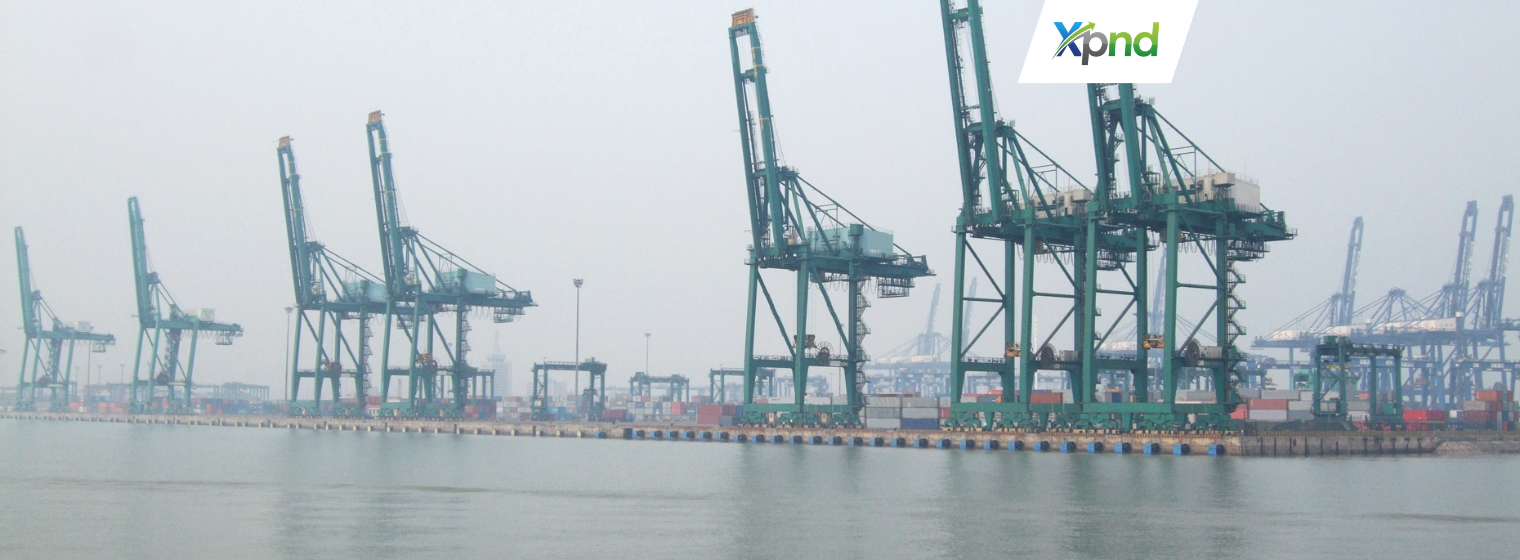
This structure makes Batam’s FTZ regime distinctively suited for companies whose primary commercial logic depends on the frictionless movement of physical goods across borders. Electronics manufacturing, shipbuilding, oil and gas fabrication, logistics and warehousing for re-export, and components processing are the industries that have historically anchored themselves in Batam for precisely this reason. Companies like Panasonic, Infineon, and Schneider Electric have maintained Batam manufacturing operations for decades, drawn by the customs architecture rather than any income tax incentive.
The income tax position of a company operating in Batam under the FTZ regime follows standard Indonesian rules unless the company separately qualifies for a tax holiday under pioneer industry criteria or other applicable incentives. The FTZ designation itself does not grant an income tax exemption.
Explore Our Services Incorporation in Indonesia
What an Indonesian KEK Offers, and Where It Differs
A KEK takes a different approach. Rather than removing an area from Indonesia’s customs territory, it creates a designated zone within the customs territory where a concentrated package of fiscal, regulatory, and immigration benefits applies to qualifying investors.
Under PP 40/2021 and the Ministry of Finance regulations implementing it, a company investing in a KEK’s primary activity with a minimum investment of IDR 100 billion is eligible for:
- Corporate income tax holiday of 10 to 20 years, under PMK No. 33/PMK.010/2021, scaling with investment size
- 50% corporate income tax reduction for two additional years after the holiday period ends
- Import duty exemption during the construction and development stage for capital goods
- VAT exemption on goods and services delivered within the KEK and on imports of goods into the zone
- Local tax and retribution reductions of 50% to 100%, under discretion of the regional government hosting the KEK
- Streamlined immigration processing for foreign workers, including expedited work permit approvals
- Special land use and spatial planning provisions that may not be available outside the zone
The income tax holiday is the defining incentive of the KEK framework. It is, in effect, a period of zero corporate income tax, which for a capital-intensive manufacturing or services investment represents a structurally different fiscal advantage compared to what the Batam FTZ alone delivers. The KEK tax holiday framework was extended through 2026 under PMK No. 69/2024, which confirmed that holiday approvals issued through the end of 2025 remain valid under their original terms, and the government has signaled continued extension as part of its investment competitiveness strategy.
One prerequisite that foreign manufacturers must evaluate before committing to a KEK is whether their business classification aligns with that zone’s defined primary activities. Indonesia’s Positive Investment List under Presidential Regulation No. 10 of 2021 determines which sectors are open to foreign ownership and at what ownership threshold, and that classification directly governs which KEK activities a foreign-owned PT PMA can legally pursue.
The 24 Active KEKs and Their Industrial Focus
As of mid-2026, Indonesia operates 24 active KEKs across the archipelago, with additional zones in development. They are not uniform. Each KEK is designated around a specific industrial cluster or economic activity, and the benefits a company can access depend on whether its KBLI classification aligns with the KEK’s defined primary activities.
The breadth of the current KEK portfolio reflects a deliberate strategy of sector-specific zone development:
- Industrial manufacturing KEKs, such as Gresik (which has accumulated IDR 92.8 trillion in cumulative investment and is among the highest-performing zones in the program), Kendal, and MBTK in East Kalimantan, focus on heavy industry, chemicals, and manufacturing
- Digital economy KEKs, most notably Nongsa Digital Park in Batam (hosting over IDR 2.9 trillion in investment and attracting global IT companies in R&D, animation, and edutech)
- Tourism KEKs, such as Mandalika in Lombok, targeting hospitality, leisure, and related services
- Specialized sector KEKs covering MRO aviation (Batam Aero Technic), healthcare and medical tourism, and education and technology clusters
Batam’s Dual Regime: Where the Two Systems Intersect
This is where the analysis becomes genuinely complicated, and where most comparative guides create confusion by treating Batam as a single investment zone.
Batam operates under two regimes simultaneously. The island retains its BBK Free Trade Zone designation under UU 36/2000 and UU 44/2007. At the same time, it hosts three separately designated KEKs within its territory: Nongsa Digital Park SEZ, Batam Aero Technic SEZ, and Batam International Tourism and Health SEZ, launched in late 2024.
A company that establishes operations inside one of Batam’s KEKs has access to both the income tax holiday under the KEK framework and, potentially, the customs benefits of the broader FTZ regime in which the KEK is embedded. This stacking of benefits is not automatic and requires careful structuring of the entity’s activities, licensing, and goods flows. But it is precisely why Batam has attracted particular attention from investors in digital services and aerospace MRO who want the income tax protection of a KEK combined with the trade facilitation of an FTZ.
A company that operates in Batam outside the three designated KEK zones, simply within the general FTZ area, accesses the customs benefits but not the KEK income tax holiday. That distinction is fundamental to investment planning, yet it is routinely missed in discussions that treat “Batam” as a single incentive category.
Choosing Between Regimes: The Questions That Actually Determine the Answer
The choice between a KEK and the standard Batam FTZ, or a combination of both, is not primarily a question of which zone sounds more favorable in a government brochure. It is a function of the specific operational profile of the business.
For companies where physical goods movement is the core business model
If your operation depends on importing raw materials duty-free, processing or manufacturing them, and re-exporting the output to international markets, the Batam FTZ’s customs architecture is directly addressing your cost structure. The zero-duty, zero-VAT treatment on imported inputs lowers your unit production cost immediately and structurally. Income tax may matter less in the early years when the operation is building scale and profitability is modest.
For this profile, a standard FTZ setup in Batam, or in Bintan, Karimun, or Sabang for that matter, captures the primary benefit. A KEK located elsewhere in Indonesia would grant an income tax holiday but would not replicate the customs-free goods movement that is the operational foundation of the business model.
For companies where the income tax position is the primary financial driver
A capital-intensive investment that expects strong profitability from early in its operational life, a large-scale services business, a pharmaceutical manufacturer, a data center, or a high-margin technology company, gains disproportionately from a long income tax holiday. At a 22% corporate income tax rate, a 10 to 20 year exemption on taxable income represents a compounding financial advantage that dwarfs most other incentive structures.
For this profile, a KEK in the right location is the stronger choice. The location should be evaluated on the quality of infrastructure, proximity to labor supply, logistics connectivity, and sector alignment, not simply on the incentive package, since the incentive package is largely uniform across KEKs.
For companies targeting both customs efficiency and income tax protection
This profile points toward Batam’s KEK-within-FTZ zones. Nongsa Digital Park, for instance, offers the KEK income tax holiday alongside access to the broader Batam FTZ customs infrastructure. Batam Aero Technic offers the same combination for aerospace MRO operators. These zones are the most complex to set up correctly, because the interaction between the FTZ customs rules and the KEK income tax regime requires precise documentation and licensing alignment.
It is also worth noting that BP Batam’s Q1 2026 investment data recorded a 102% year-over-year surge in investment, reflecting significant momentum from both domestic and foreign investors entering through all of Batam’s available zones.
Operational Realities That Matter as Much as the Incentive Package
Two dimensions of operating reality tend to get less attention than the incentive schedules, but routinely determine whether an investment delivers on its projected economics.
The first is licensing authority. Inside a standard KEK elsewhere in Indonesia, licensing flows through the national OSS-RBA system integrated with the KEK Administrator. In Batam’s FTZ, BP Batam issues the IUK and remains the primary regulatory relationship for the investor. Understanding which authority governs which obligation, and where those two systems interact for Batam KEK companies, requires direct engagement with both institutions. For foreign manufacturers establishing a manufacturing company in Indonesia, the entity registration follows standard Indonesian corporate law, but the licensing layer on top of that registration differs materially depending on the zone chosen.
The second dimension is goods classification at the zone boundary. For Batam FTZ companies that also sell into the Indonesian domestic market, goods leaving the FTZ for domestic distribution are treated as imports, triggering standard VAT and duties. This affects pricing models, supply chain design, and transfer pricing considerations between the Batam entity and any mainland Indonesian distribution or sales entity. Companies that underestimate this boundary effect during investment planning often discover it as a margin problem after operations begin. It is also worth noting that the government recently expanded the Batam FTZ area significantly under Government Regulation No. 47 of 2025, adding new islands and sub-zones to the BBK free trade area, which changes the geographic scope of what qualifies for FTZ customs treatment.
Both of these require structured analysis as part of market entry planning, well before any entity is registered or any lease is signed. XPND’s Batam office works directly with foreign investors evaluating both the FTZ and KEK options on the island, helping identify which regime fits the operational model before the company commits to a location or entity structure.
The Compliance Layer: What Running a Zone Business Requires Ongoing
Operating inside a KEK or the Batam FTZ is not simply a matter of obtaining the right initial license and then running the business normally. Both regimes carry ongoing compliance obligations that are specific to the zone status.
For KEK companies, the primary ongoing obligations include:
- Regular reporting to the KEK Administrator on investment realization progress against the approved investment plan
- Maintaining the goods flow documentation that distinguishes zone-origin transactions (benefiting from VAT exemptions) from transactions involving goods leaving the zone
- Annual corporate tax filings that accurately reflect the income tax holiday position, including proper documentation of the holiday period start date, investment realization milestones, and eligible income categories
- Transfer pricing documentation for any transactions with related parties outside the KEK, which requires separate analysis under PMK 172/2023
For Batam FTZ companies, the equivalent obligations run through BP Batam’s administrative framework rather than the standard national tax and licensing system, with customs reconciliation through CEISA 4.0 and PPKEK goods movement recording as the central operational compliance requirements.
In both cases, companies that treat zone compliance as an afterthought, something to be sorted out after operations begin, tend to encounter the costs of remediation rather than the benefits of the incentive. The XPND regulatory compliance practice supports zone-based companies through both the initial setup and the ongoing reporting cycle, ensuring that the incentives accessed during entry are maintained and documented through the operational life of the investment.
Indonesia has built one of the most diverse and geographically distributed investment zone programs in Southeast Asia. Twenty-four active KEKs spanning digital economy, heavy industry, tourism, healthcare, and aerospace, combined with four FTZFPs that remain structurally competitive for export-oriented goods manufacturing, give foreign investors more genuine optionality than they typically recognize when they begin evaluating the market.
The challenge is not finding incentives. The challenge is matching the right incentive structure to the actual business model, and then ensuring the entity setup, licensing sequence, and compliance architecture are aligned from day one. Getting that sequencing right is exactly what separates an investment that delivers the projected return from one that spends its first three years correcting structural decisions made before the company fully understood the terrain.
If you are evaluating Indonesia as a manufacturing, services, or logistics base and trying to determine which zone framework, if any, fits your operational profile, the XPND team can walk through the specifics with you before you commit to a location. The right zone is determined by your business model, not by which incentive description looks most attractive on paper.